
Guide / Factory verification
How to verify a flooring factory in Vietnam: factory, trader or relabel?
Check the legal company, the production site and the product on your quote: registry checks, permits, video calls, documents to request, shipping names.
Short answer
Treat the company, the plant and your product as three records and make the supplier link them. The checks that catch a trader posing as a factory are a permit that ties the seller to a production lot, an unscripted call on a running line, and one legal name on contract, bank account and certificates. Badges, brochures and showroom tours prove very little.
Weigh the links between records, not the records. A clean registry entry only tells you the company exists.
A government permit naming the seller at a lot, and a live call you steer, beat any badge or brochure.
A trader is fine when the contract names the plant. A trader who will not name it is the problem.
Three records, and the links between them
You are not checking “a factory”. You are checking a legal company that signs and invoices, a site that makes the floor, and the product on your quote. Each can be real while the links between them are not. A trader posing as a factory usually passes every single check. It fails at the joins.
| Record | The question | Where it breaks |
|---|---|---|
| Legal entity | Who signs, invoices and takes your money? | The seller is real but owns no plant |
| Production site | Where is the floor physically made? | The plant is real but belongs to someone else |
| Product on your quote | Is this construction made at that site? | The certificate covers a different plant or product |
Which checks catch a trader, and which are theatre?
This is our weighting. A check scores high when it is hard for a reseller to fake and cheap for you to run. It scores low when the supplier controls what you see.
| Check | What it catches | What it cannot catch | Our weight |
|---|---|---|---|
| Government permit naming the seller at a lot | A seller with no plant of its own | Which line runs your order | High |
| Live call you steer, on a running line | A showroom or a borrowed plant | Whether bulk matches the sample | High |
| One legal name on contract, bank and certificates | Payment to a middleman or a stranger | Product quality | High |
| Shipper name on US customs records | A “factory” that has never exported | Which plant made those goods | Medium |
| “Where is the core extruded?” asked cold | A reseller of imported cores | A rehearsed answer | Medium |
| Business lines on the registry | A company registered for trade only | A trader that also lists manufacturing | Medium |
| Registry entry exists | A company that does not exist | Almost everything else | Low but mandatory |
| Directory or marketplace badge | Very little | Nearly everything | Theatre |
| Brochure, group capacity, customer logos | Nothing you can test | Everything | Theatre |
| Pre-recorded factory video or showroom tour | Nothing about your order | Whose line it is, and when | Theatre |
Two of the theatre items deserve a word. Badges first: Yellow Pages Vietnam states that its own “Verified” label only means a tax code was declared. Capacity second: figures are claims, and they often disagree with themselves. The same NEO FLOOR company page shows different capacity figures in different places, which is why our NEO record uses the stated “up to” figure and labels it as a claim.
The legal company: five minutes, and what it misses
Search the 10-digit enterprise code on the National Business Registration Portal. A name search returns close matches; a code returns one company. Compare the registered name, head office, legal representative, status and business lines with the quote and the draft contract.
This check is mandatory and weak. It tells you a company exists and who represents it. It does not tell you that company owns a plant. Where it earns its keep is the name: trade names hide legal names. Our records show VFLOOR is Havitech Production Joint Stock Company and ATT Floor is An Thinh Tien Plastic Joint Stock Company. If the contract shows the brand and not the legal name, fix the contract.
Then hold one rule: the legal name on the registry, the contract, the bank account and the certificates is the same, or you know in writing why not. A bank account in a person’s name or a third company’s name stops the deal until it is explained. A change of bank details by email or chat is confirmed by phone to a contact you already know.
One trap that is not a red flag: several provinces merged in 2025, so a 2024 certificate can show an older province name than a 2026 contract. Check it, then move on.
The production site: make them prove the lot
Ask for the industrial park lot, then for a document that ties that lot to the seller. Vietnamese plants usually sit in industrial parks with lot numbers. Our Vietnam Sentai record, for example, places the company at Lot CN18, Yen Binh Industrial Park, Thai Nguyen. A lot number lets you check satellite images and match the address across papers.
Government papers are the best public evidence, because the factory did not write them. The Quang Ninh environmental permit report for BBL Home names the operating company, its Singapore-registered owner, the investment certificate number and Lot CN-06 at Dong Mai Industrial Park. One file links company, owner and site. That is the standard to ask for. A supplier that claims full production but cannot point to any permit at any lot has told you something.
Groups with several plants need one more question: which lot runs your order? NEO FLOOR describes two factories at Lot CN4.1 and Lot CN4.3, Dinh Vu, Hai Phong, and our record belongs to the SPC site. The An Cuong record shows two plants with two different certificate holders. In both cases a certificate can be genuine and still not describe your plant.
What a video call proves, and what it cannot
A call is the cheapest strong check, if you run it. Ask for it at short notice. A delay of a few days for a “busy line” is normal once; repeated delays are a pattern.
What it should show:
- The gate, the company sign and the street, so you can match them to satellite images and the lot
- An extrusion line running, then the camera following product from extruder to cutting
- Raw material store: PVC resin, calcium carbonate, decor film rolls
- UV coating, click profiling and pad lamination, if they claim them in-house
- Today’s date on paper in shot, and a person on camera who works there and can say what they do
What it cannot prove: that this line will run your order, that the plant belongs to the seller and not a partner, or that bulk will match the sample. In our view a good call moves a supplier from “unknown” to “worth a document request”. It is not approval. Quality of the goods needs a pre-shipment inspection; certificate scope needs the issuer’s own listing.
Red flags in how a supplier answers
The words often tell you more than the files. These are the answer patterns we would weigh, not proof on their own:
- “We are factory and trading company.” Often true for groups. Your next question is which plant, which lot, which legal name.
- “Let me check with the factory.” Fine for a delivery date. Not fine for where the core is extruded or which line runs SPC.
- A group brochure in reply to a plant question. Group capacity and staff numbers are not your plant’s.
- Certificates in another company name, sent without comment. A real producer usually explains the link before you ask.
- Pushback on naming the plant in the contract. A trader who works openly will name it. One who will not is protecting a margin you cannot see, or a plant that may change.
- A new bank account “for this order”. Stop and call.
A worked example
Take a hypothetical supplier. It quotes a 5 mm SPC under a brand name and calls itself a factory.
- Registry. The legal name differs from the brand, the head office is a city address, and the business lines are trade and import-export. Not fatal. It looks like a trader.
- Lot. Asked for the plant, it names a lot in a Hai Phong industrial park. The certificates it sends are held by a second company at that lot.
- Link. Asked how the two companies relate, it sends nothing for a week, then a short letter on its own letterhead.
- Call. It offers a call “next month” and sends a factory video instead.
Our read: this is a reseller of the second company’s product, which can be a fine arrangement. The weak points are steps 3 and 4. We would ask for a permit or ownership document for the second company, run a short-notice call at that lot, and make the contract name the second company as producer. If the seller refuses to name the producer, we would quote the second company directly and compare. Paying the trader without the producer named in writing means the certificates, lab reports and origin papers describe a plant nobody has promised you.
The documents worth asking for
| Document | What it links | Red flag |
|---|---|---|
| Investment certificate (foreign-owned) | Owner to project and site | Site differs from the plant you were shown |
| Environmental permit or report | Company to lot | None for a plant claiming full production |
| Certificates (FloorScore, ISO, CE declaration) | Holder and plant to scope | Holder or plant differs; expired |
| Lab reports for your construction | Product to tested sample | Different thickness, core or company |
| Bill of materials with input origins | Product to origin claim | Cannot say where the core is extruded |
| Bank account letter | Payee to contract party | A person or another company |
Read each for name, address, scope and dates, and check certificates with the issuer, not the PDF. Our guides to reading the certificate, not the badge and checking a FloorScore certificate cover that. On our factory records, manufacturer statements, documents read, expired documents and evidence gaps are labelled separately: the VN EcoFloor record notes a stated former name, Kien An Plastic, and the Sentai record shows a FloorScore document that expired in November 2025.
Shipping records: useful, if you search the right name
US import records list the shipper on past arrivals, usually the legal name, not the brand. A match shows the company has exported. It does not show which plant made the goods. VFLOOR goods appear under Havitech Production Joint Stock Company; NEO FLOOR under Neofloor Joint Stock Company and Pha Le Plastics Manufacturing and Technology JSC; VN EcoFloor under its current name and Kien An Plastic.
A gap is a question. Our AMY record is the case in point: no US records turned up under the brand, and the company may ship under its legal name, Asia US Industrial JSC. US rules also let shippers and importers ask for manifest confidentiality. Ask which name goes on the bill of lading, then search that.
Common mistakes
- Stopping at the registry. It proves a company exists, not that it makes anything.
- Giving badges and brochures weight. They are written or sold by the party you are checking.
- Letting the supplier run the call. A tour of the showroom and a stopped line answers nothing.
- Accepting a genuine certificate for the wrong plant. Match holder and site to the lot that runs your order.
- Rejecting every trader. You lose good partners for small orders. Reject the ones who will not name the plant.
- Paying before the names line up. Once the deposit leaves, your bargaining power goes with it.
Our view
Spend your effort on the links, not the lookups. The registry check is five minutes and mandatory, but it rarely catches anyone. What catches a trader posing as a factory is a document the factory did not write placing the seller at a lot, a call you steer on a running line, and a contract, bank account and certificate set that all carry one name. If a supplier passes those three, the rest is product checking. If it fails one and will not explain, walk, or go to the plant directly.
Put these questions into your quote brief so every supplier answers the same ones in writing. Start from the factory directory, or ask our team in Hanoi to help with factory selection and meetings with your shortlist.
Questions buyers ask
Is the enterprise code the same as the tax code in Vietnam?
Yes. Since the 2020 Law on Enterprises and its 2021 decree, the enterprise code also works as the tax code. If a supplier gives you two different numbers for one company, ask why.
What does a "Verified" badge on a directory or marketplace prove?
Usually very little. Yellow Pages Vietnam says its own "Verified" label only means a tax code was declared and is not a quality check. Read what each badge claims on the platform itself before giving it any weight.
The certificates are in a sister company name. Is that a deal breaker?
Not on its own. Groups often split the plant and the exporter. Ask for a document that links the two, such as an ownership chart or permit, and have the contract name the producing company. Do not pay the sister company unless it signs.
Should I ask the factory for a reference customer?
You can, but treat it as weak evidence: the factory picks the reference. A shipper name you search yourself on customs records, with real buyer names and dates, tells you more.
Do I need to visit the factory before ordering?
Not for a first desk check. Before a large or repeat programme, yes, or send someone who reports to you. Write down beforehand what the visit must confirm, or it turns into a tour.
Sources & further reading
- Vietnam National Business Registration Portal: enterprise search
- Tilleke & Gibbins: new decrees clarify the 2020 Enterprise and Investment Laws (enterprise code as tax code; public portal)
- Quang Ninh Department of Natural Resources and Environment: BBL Home environmental permit report (May 2024)
- NEO FLOOR: Factory No. 1 and Factory No. 2 descriptions
- 19 CFR 103.31: public access to vessel manifest information and confidentiality requests
- ImportGenius: Havitech Production Joint Stock Company supplier page (checked Oct 2026)
Authorship, affiliations & disclosure
Prepared by our team from the public registries, government documents and factory records linked here. It explains a buyer-side checking method. It is not a factory audit, and no factory visit is reported in this guide. We offer factory selection and meetings with shortlisted factories as a separate service.
Corrections & editorial informationContinue exploring.
The reading room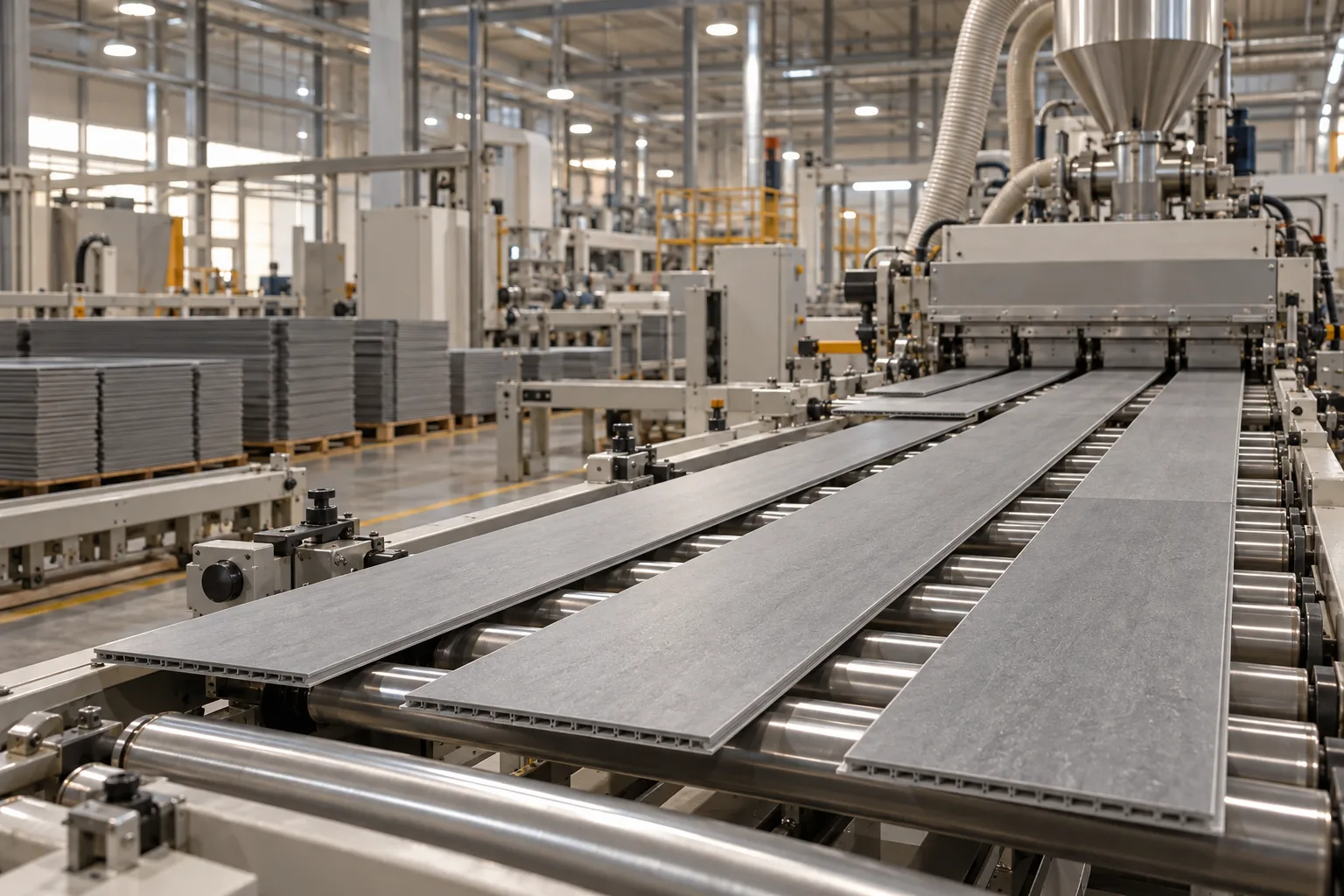
How to check the origin of SPC flooring made in Vietnam
Check 4 evidence trails before an SPC order: factory, materials, production and shipment. A buyer workflow grounded in US customs rules.
Read the feature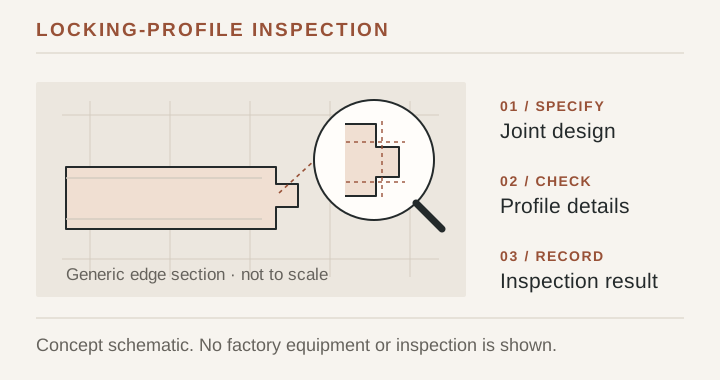
SPC click licences: what an importer should check
Check 4 links between producer, click technology, territory and cartons. Licensor guidance separates a licence from click-joint quality control.
Read the feature
UFLPA and PVC flooring: trace the materials behind the order
Build a PVC traceability file for a US flooring order using CBP guidance updated in 2026. Separate final-plant audits from upstream evidence.
Read the feature